

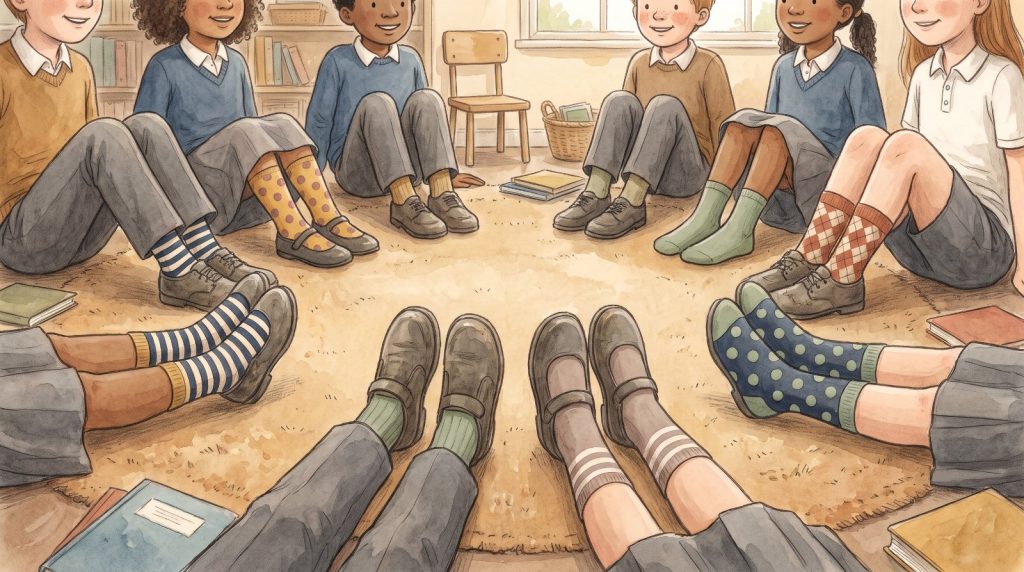
Anti-Bullying Week 2026 runs from Monday 16 to Friday 20 November, coordinated by the Anti-Bullying Alliance. The theme is Break the Silence: children are asked to speak up and share what is happening to them, and the adults around them are asked to listen, support and act. Odd Socks Day opens the week on Monday 16 November — everyone wears odd socks to celebrate that we are all different.
Most Anti-Bullying Week resources are posters, slogans and assemblies. Those matter, but a nine-year-old does not learn to speak up from a slogan. They learn it from watching someone their own age do it — badly first, then better. That is what a story gives a class that a poster cannot: a child who stays silent, and then finds the words.
This page gives you one story for ages 8–14 that fits the theme exactly, a ten-minute assembly script you can read on Monday morning, a five-day plan for the week, and a printable discussion pack. Everything on this page is free to download.
Free downloads — no sign-up
- Assembly script (PDF, 2 pages) — a ten-minute Monday assembly for Odd Socks Day.
- Discussion pack (PDF, 7 pages) — questions, a 30-minute lesson, tools and two pupil worksheets.
- Read-aloud of the story (video, 13 minutes) — play it instead of reading aloud yourself.
Why “Who Erased My Name?” fits Break the Silence
Who Erased My Name? is Book 9 of the Lena series. Lena is ten. On Tuesday evening she finds the team list with eight names on it, and hers is not one of them. Practice times change and nobody tells her. Her messages go unanswered. A classmate called Madison smiles sweetly and cuts deeply.
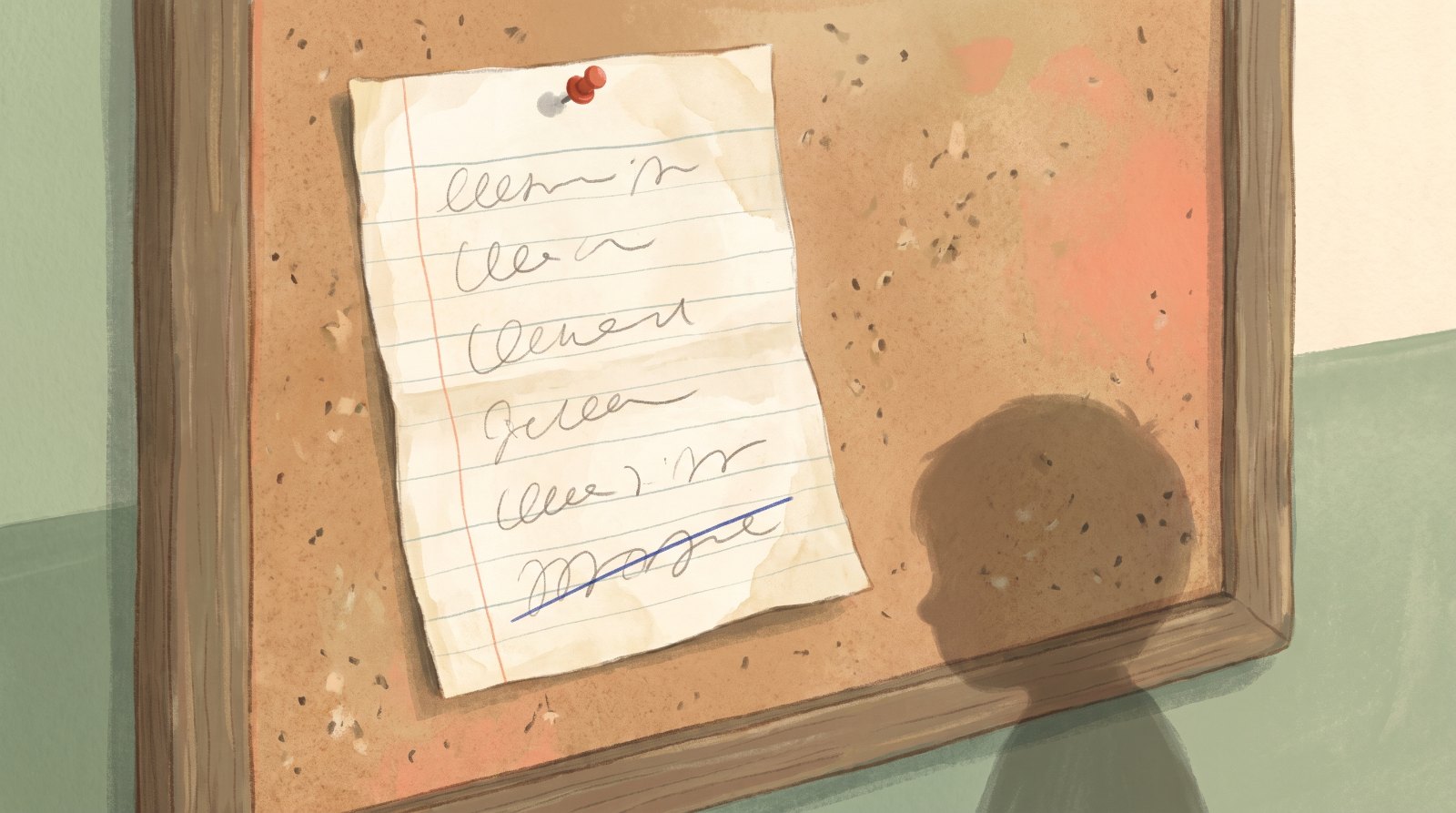
Inside Lena’s head a film starts playing — they are mocking me, I am unwanted — and she does what most children do: she withdraws before anyone can reject her. She goes quiet. That silence is the heart of the story, and breaking it is the plot.
Her mum does not tell her to “just ignore them”. She gives Lena three things:
- A three-line card — See, Think, Check. What did you actually see? What did your head add? Shall we wait, or ask?
- A five-rung ladder of tiny brave steps. Rung one is only “stay in the room”.
- A rehearsal. Mum plays Madison, so Lena can practise a hard conversation with her voice steady.
Lena stays in the room, asks instead of guessing, and discovers that most of what she was sure of was a misunderstanding — the whisper was about a potato-nose drawing. And where the harm was real and deliberate, she learns the safety line every child needs for Anti-Bullying Week: if it is deliberate, repeated or threatening, tell a grown-up you trust. Proving it is not your job.
That is why the story works for Break the Silence. It shows both halves of speaking up: checking before you believe the worst, and telling an adult when the worst is true.
A ten-minute Monday assembly (Odd Socks Day)
The assembly script is written to be read aloud without preparation. The shape of it:
- Odd socks (1 minute). Everyone looks at their socks. Different is the point.
- The list with eight names (3 minutes). Read the opening of Lena’s story — the list, the silence, the film in her head. Stop before she decides what to do.
- Two questions to the hall (2 minutes). “What do you think Lena will do?” and “What would you want her to do?” Take three hands each.
- The card (2 minutes). Show the three lines — See, Think, Check — and say them together.
- The safety line (2 minutes). Deliberate, repeated, threatening: tell a grown-up you trust. Name the adults in your school children can go to.
Finish with the week’s question on the wall: “Who could you tell?”
A five-day plan for KS2 (Years 4–6) and early KS3
| Day | Focus | 20–30 minutes |
|---|---|---|
| Monday | Odd Socks Day · Speak up | The assembly above. In class: read chapter one; pupils write the “film” Lena’s mind is playing. |
| Tuesday | See – Think – Check | Make the three-line card (worksheet 1 in the pack). Practise on a harmless classroom moment. |
| Wednesday | The ladder | Build a five-rung ladder for one hard situation (worksheet 2). Rung one must be almost effortless. |
| Thursday | Rehearse the hard talk | Pairs: one plays Madison, one plays Lena. Steady voice, say what happened, say what you want. |
| Friday | The misunderstanding list · Tell an adult | The class list of “I was sure they were against me — and it was a misunderstanding”. Then the safety line: name the adults. Letter to yourself. |
The plan maps to the PSHE Association Programme of Study for KS2 — Relationships R14, R17, R18, R19 and R20 (healthy friendships, ups and downs, friendships that feel unsafe, the impact of bullying, responding to hurtful behaviour and reporting concerns) — and to the statutory RSE strands Caring friendships and Respectful relationships.
What is in the free discussion pack
Seven printable A4 pages: a story summary so you do not need the book to run the session, eight discussion questions, a 30-minute lesson, four practical tools with “try saying” scripts for teachers and parents, the Misunderstanding List activity with cut-out cards, and two pupil worksheets — The Three-Line Card and The Five-Rung Ladder. It is written for ages 8–12 (upper KS2 and early KS3) and every activity was checked against that range.
Misunderstanding or bullying? The line children need
Anti-Bullying Week can accidentally teach children that every unkind moment is bullying. The Anti-Bullying Alliance definition is narrower and more useful: bullying is repeated, intentional and involves an imbalance of power. The story keeps that line clear. Most of Lena’s week is misunderstanding — and checking fixes it. One part is deliberate — and telling fixes that. Children who can tell the two apart speak up sooner about the second, because they are not crying wolf about the first.
Frequently asked questions
Is the story suitable for Year 3?
It is written for ages 8–14. Confident Year 3 readers can follow it read aloud; the activities are pitched at Years 4–6 and Years 7–8.
Do we need a copy of the book for every child?
No. The pack includes a summary and the assembly script uses only the opening. For guided reading, an eleven-copy set is available on the schools page.
Does the pack mention the book’s price or sell anything?
No. The pack and the assembly script are free and contain no shop links; they carry the Kidsbooks name only.
Can parents use it at home?
Yes. The four tools on page 4 are written so they can be sent home; the three-line card was designed to live in a schoolbag.
Is the story religious or culturally specific?
No. Lena’s world is secular and the situations — a team list, a group chat, a whisper — are the same in any school.
The book behind this week
Every activity above works with a story children can actually follow. Who Erased My Name? is the one we wrote for this week: a girl is quietly left out, says nothing for four days, and finds out what happens when she finally speaks. It is a short chapter book for ages 8–14, written to be read aloud in about twenty minutes a day.
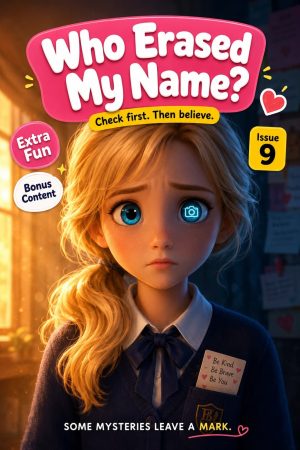
Theme: being left out, and the silence that follows it. Twelve short chapters, an interest age of 8–14; at 8–9 we recommend reading it together with an adult. Paperback and ebook.
Listen to the opening chapters free on our read-aloud recording, then decide whether it belongs in your week.
Nine more stories for the rest of the year
Anti-Bullying Week is one week. The behaviour it raises — the temper, the copying, the silence, the worry — comes back every term. These are the other stories in the same series, each built around one thing children actually do.
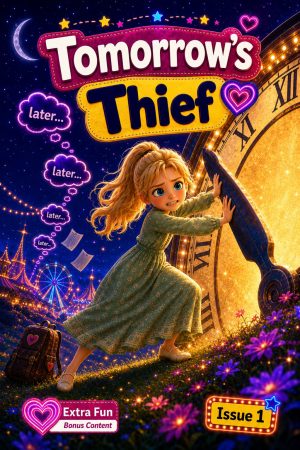 Tomorrow’s ThiefPutting things off
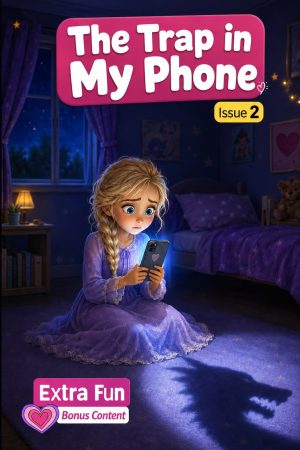 The Trap in My PhoneSecrets and online pressure
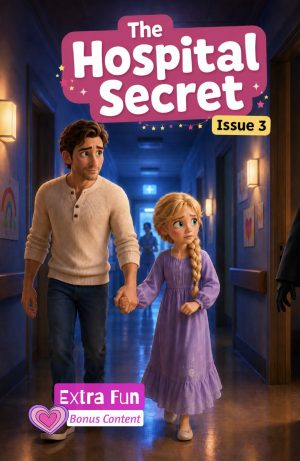 The Hospital SecretWhat-if worry
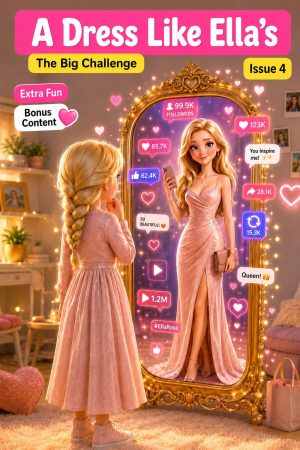 A Dress Like Ella’sCopying the crowd
 A Volcano Inside MeAnger
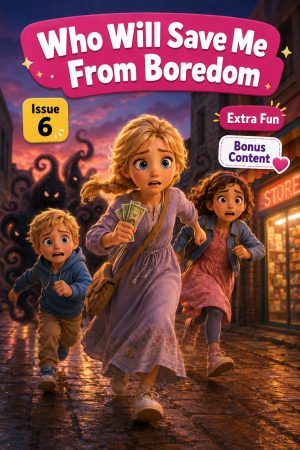 Who Will Save Me From BoredomBoredom and screens
 Sixty Cakes in the BinWaste and taking things for granted
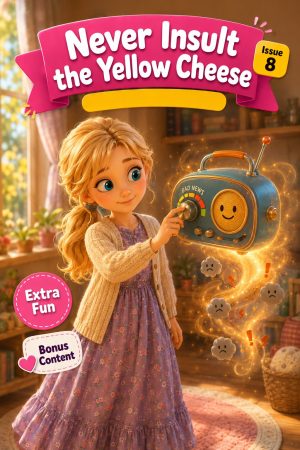 Never Insult the Yellow CheeseHurtful wordsWho Erased My Name?Being left out
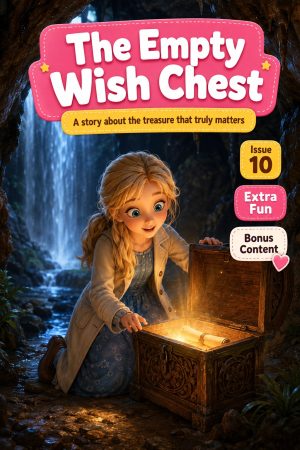 The Empty Wish ChestWishing instead of doing
See all ten with a read-aloud link for each, or browse the school packs if you need a set for a class.
Downloads and next steps
- Assembly script (PDF, 2 pages) — Break the Silence, a ten-minute Monday assembly built on Who Erased My Name?
- Discussion pack (PDF, 7 pages) — Feeling Left Out: discussion guide and activities, ages 8–12.
- Free read-aloud (13 minutes) — the opening chapters read by a professional narrator, with chapter markers.
- The book: Who Erased My Name? — A Lena Story About Feeling Left Out (paperback, ages 8–14).
- For schools: class sets, guided-reading sets and the PSHE mapping.
- More stories by the problem they solve: all ten Lena stories for ages 8–14.
- Next on the school calendar: the free Safer Internet Day 2027 lesson pack (Tuesday 9 February) — a 45-minute KS2 lesson on online tricks, secrets and asking for help.
Anti-Bullying Week is one week. The card, the ladder and the safety line are meant to stay in the classroom all year.